Maksimir pitch opened 114 years ago
Anniversary
The view was completely different – a wooden fence along the edge of Maksimir park, a modest wooden stand beneath which five tennis courts were situated, a pitch surrounded by several apple trees... That's how it looked, as suggested by records, oral traditions and some photographs, in the very beginning. On this day, 5 May 1912, a new playing field was ceremonially opened, around which, over time, through gradual architectural interventions, a sports complex emerged near Maksimir forest – Maksimir Stadium.
The idea was clear: to create a sporting oasis near the city park... That's how the idea of building a playing field was conceived, created and implemented, representing a harmonious blend of sport and nature, park and recreation, flora and fauna...
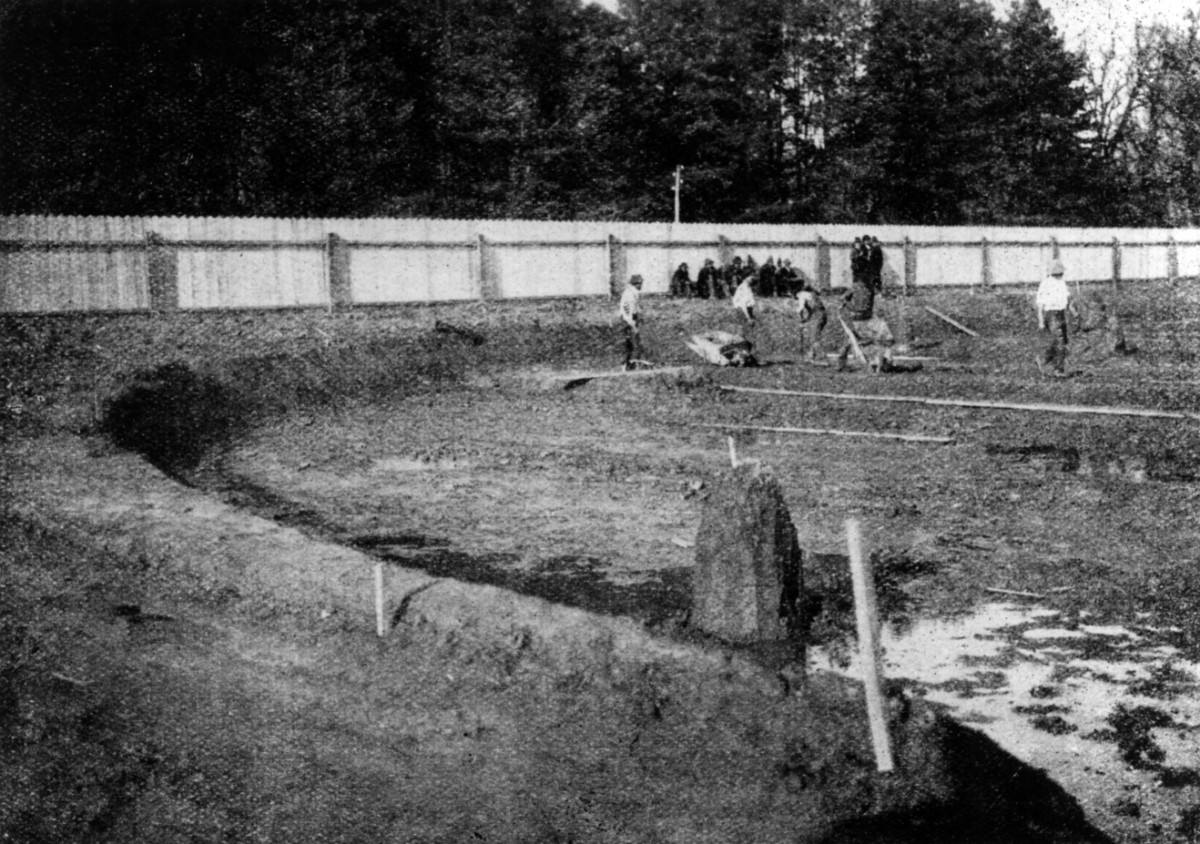
Zagreb academics, gathered in HAŠK, conceived the project in 1911 and implemented it a year later for the construction of a sports field in what was then the outskirts of the city. In search of a suitable location for building a football pitch, HAŠK representatives approached Archbishop Dr. Antun Bauer, who was the driving force behind the construction of the later sports complex near Maksimir park. Archbishop Bauer, as rector of Zagreb University, had a special feeling for sporting activities within the academic community. Therefore, in 1912, he leased the land to HAŠK on which a football pitch was built that same year.
At the opening on 5 May of the same year, the main event was a football match between HAŠK and Hungarian BAK, but the first match was actually played by – Građanski. And that 'against themselves'. At the opening ceremony, before the match between HAŠK and Budapest's BAK, Građanski's first and second teams faced each other. The 'Senators' won 7-0.
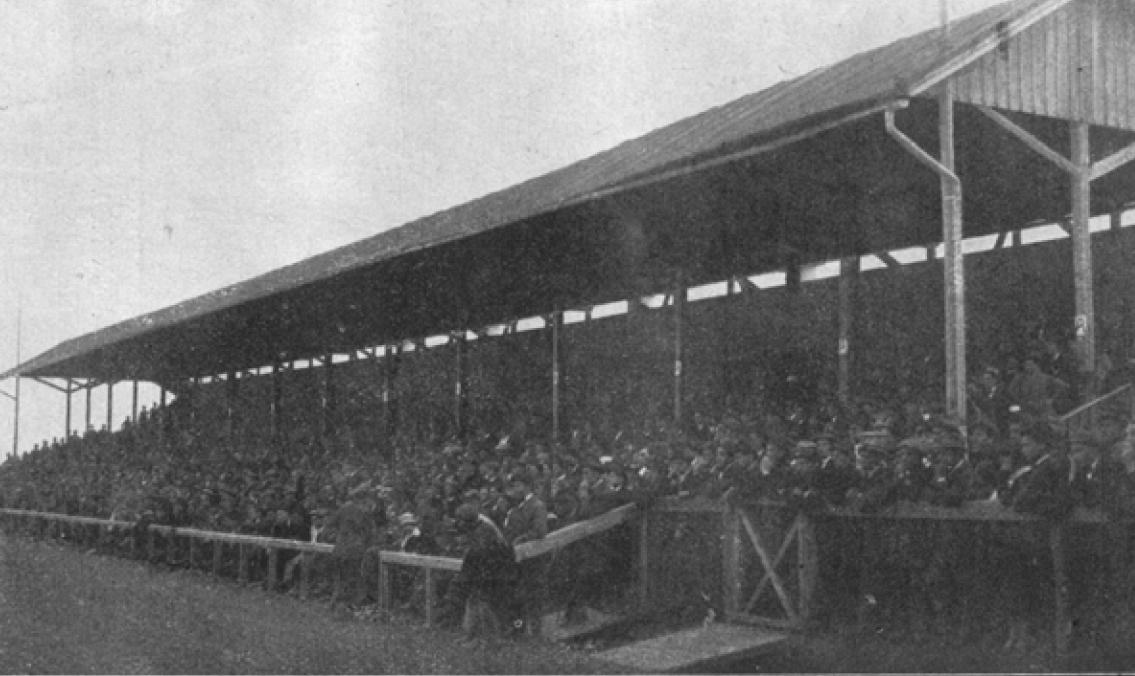
Soon after that, Građanski's players moved to the Maksimir playing field for some time, where they also trained. The Zagreb club was then still just a young team, having celebrated its first birthday only nine days earlier, while the eight-year-older HAŠK was already in a position to acquire its own playing field.
Below the western stand, five tennis courts were arranged, and on one of them, precisely on the site of today's southern tower with lifts, the first official Davis Cup match of the former Yugoslavia national team was played in 1927. Archbishop Bauer was notably supportive of HAŠK's rival Građanski as well, helping them during difficult periods and thus becoming the first honorary president of the Zagreb club.
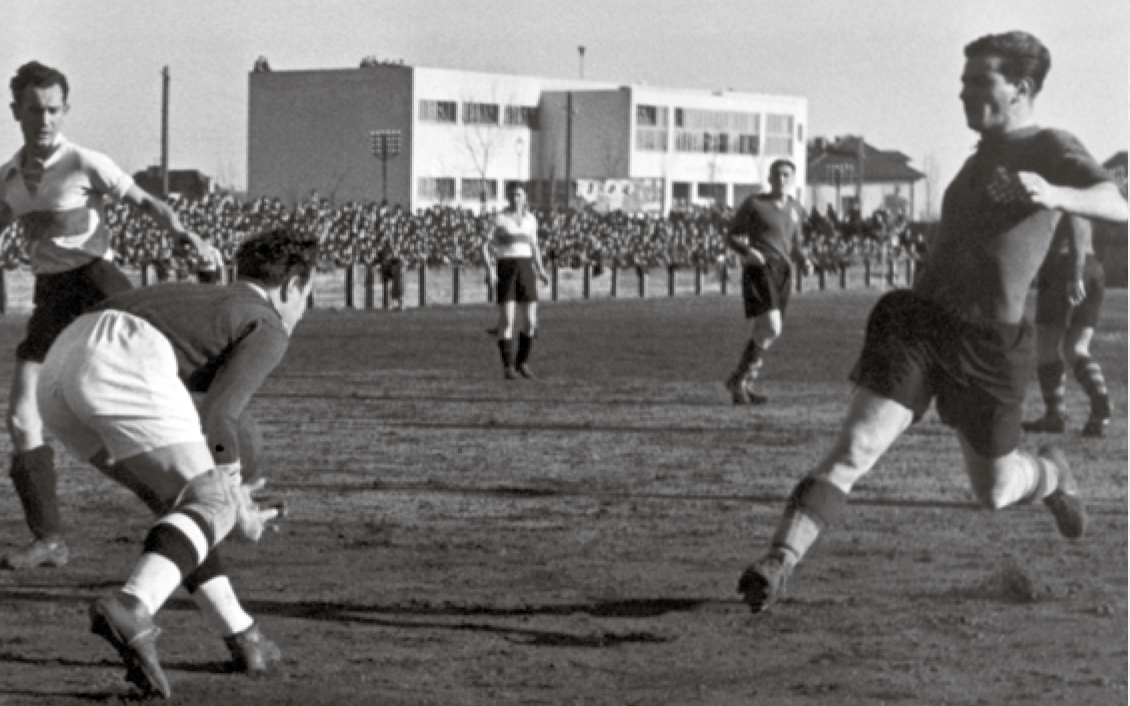
After the war, Dinamo, as the continuation of Građanski, played at the old ground in Koturaska Street. The Blues moved to the Maksimir pitch in 1948, and in January 1952, the Executive Committee of the City of Zagreb, with confirmation from the Government of the People's Republic of Croatia and the People's Committee of Zagreb, transferred the entire complex to the club's ownership.
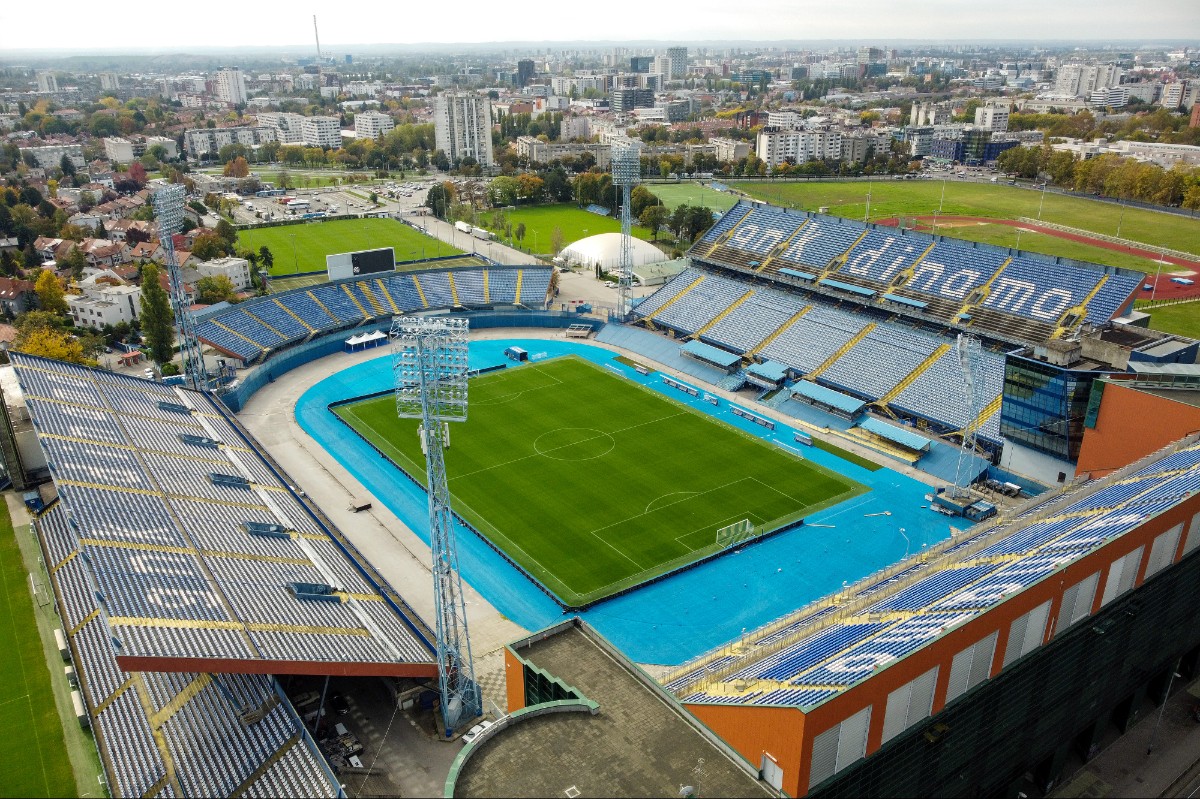
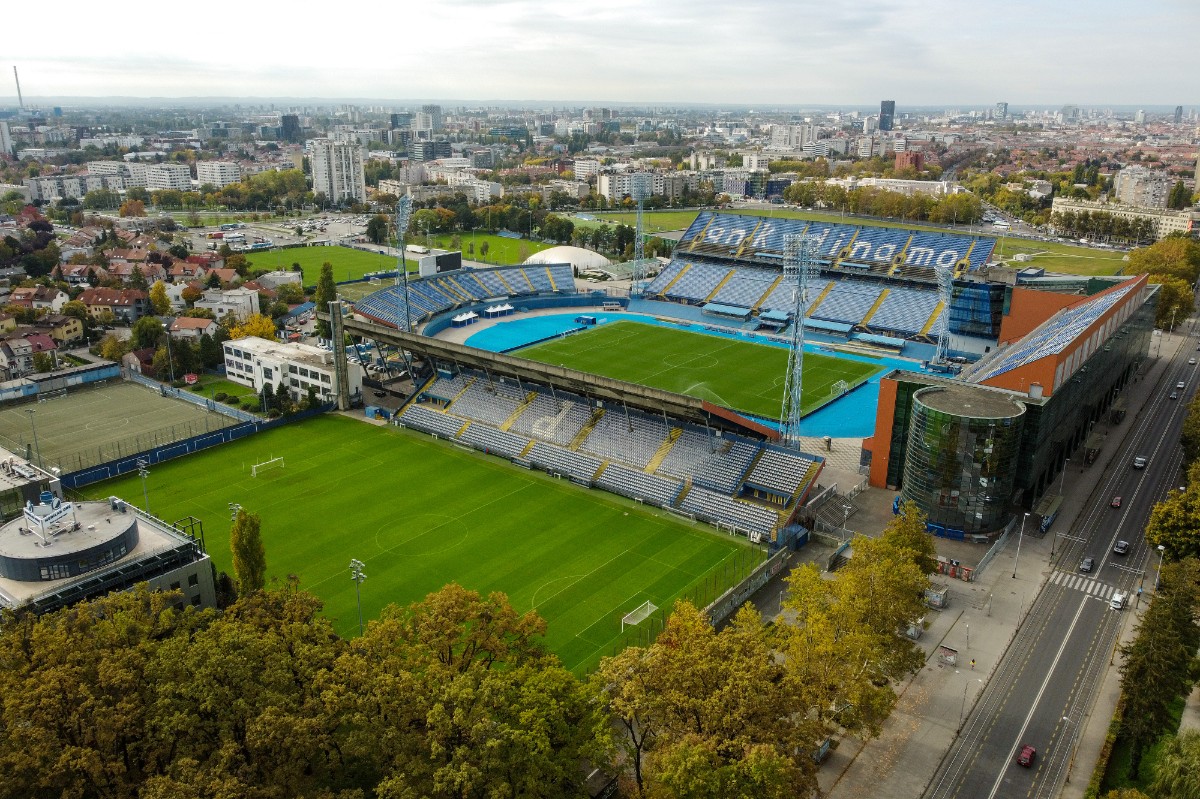
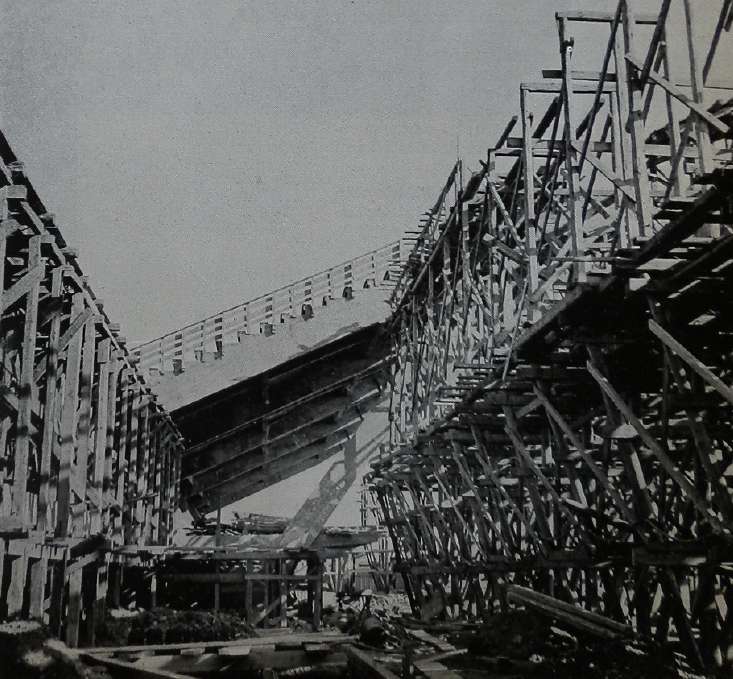
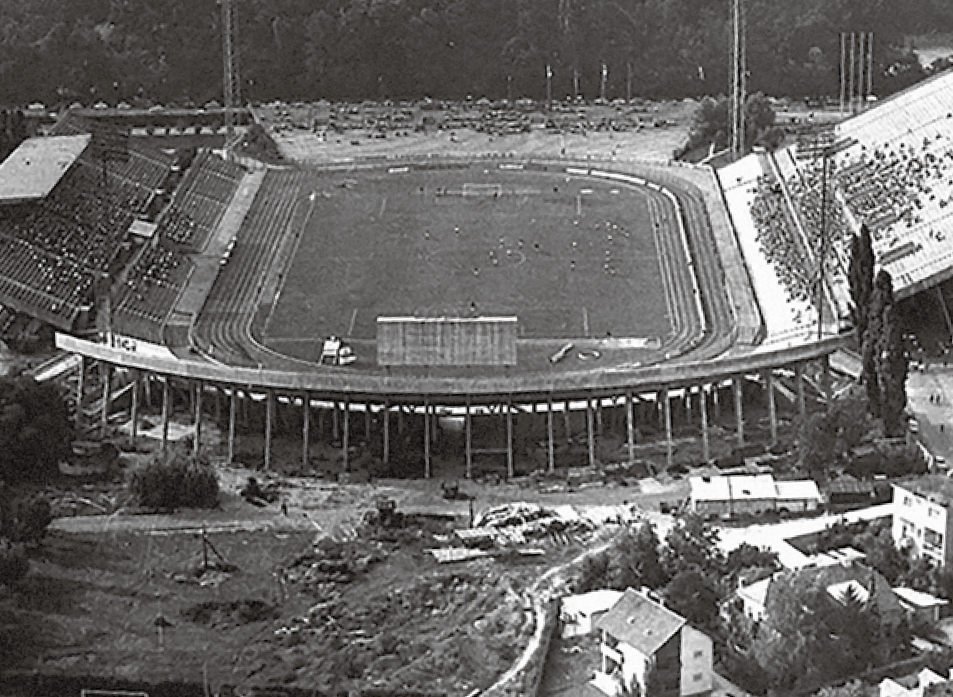
Dinamo then, immediately after moving, initiated renovation work on the playing field: built a smaller concrete stand on the west side and placed embankments for spectators around other parts of the ground. Construction of the stadium complex began in 1953 according to the project by architect Vladimir Turina. The first works involved installing an athletics track and building the complete western stand. The northern stand was erected in 1955, the eastern in 1962, while the southern stand was completed in 1969.
Built in stages, the stadium received electric lighting in 1961, which was replaced in 1974 when the old floodlights were moved to the stadium in Kranjčevićeva Street. A new renovation followed before the 1987 Universiade with changes to the roof of the western stand.
During wartime, when all thoughts were focused on defending the homeland and sporting activities were secondary, the club itself fell into serious existential problems. As it had no possibility of maintaining the stadium, the entire sports complex was transferred to the ownership of the City of Zagreb in 1992.
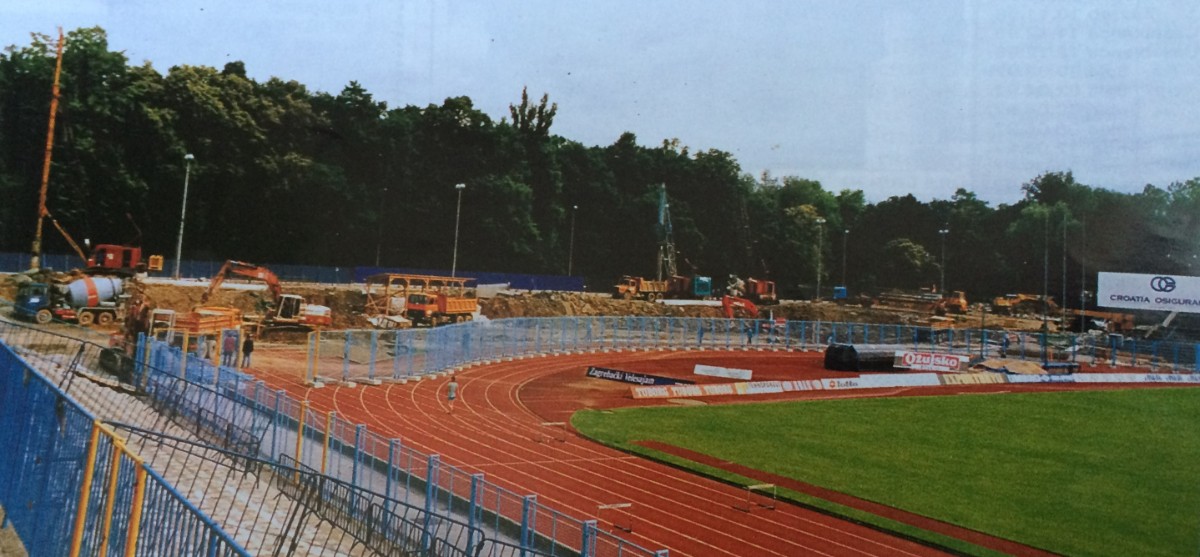
A major stadium reconstruction began in 1998 with the demolition of the old northern stand and construction of a new one, along with the extension of the upper western stand. The project envisioned removing the athletics track and lowering the pitch, but work was abruptly halted in December 1999.
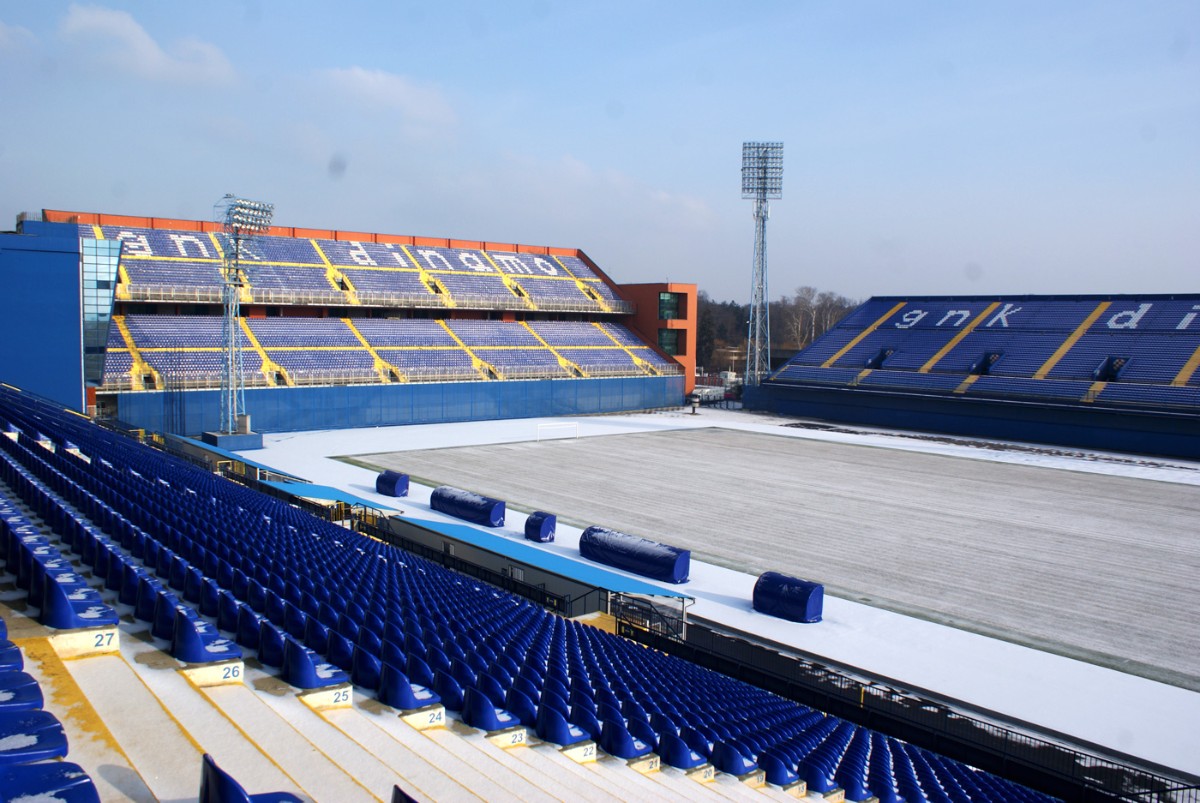
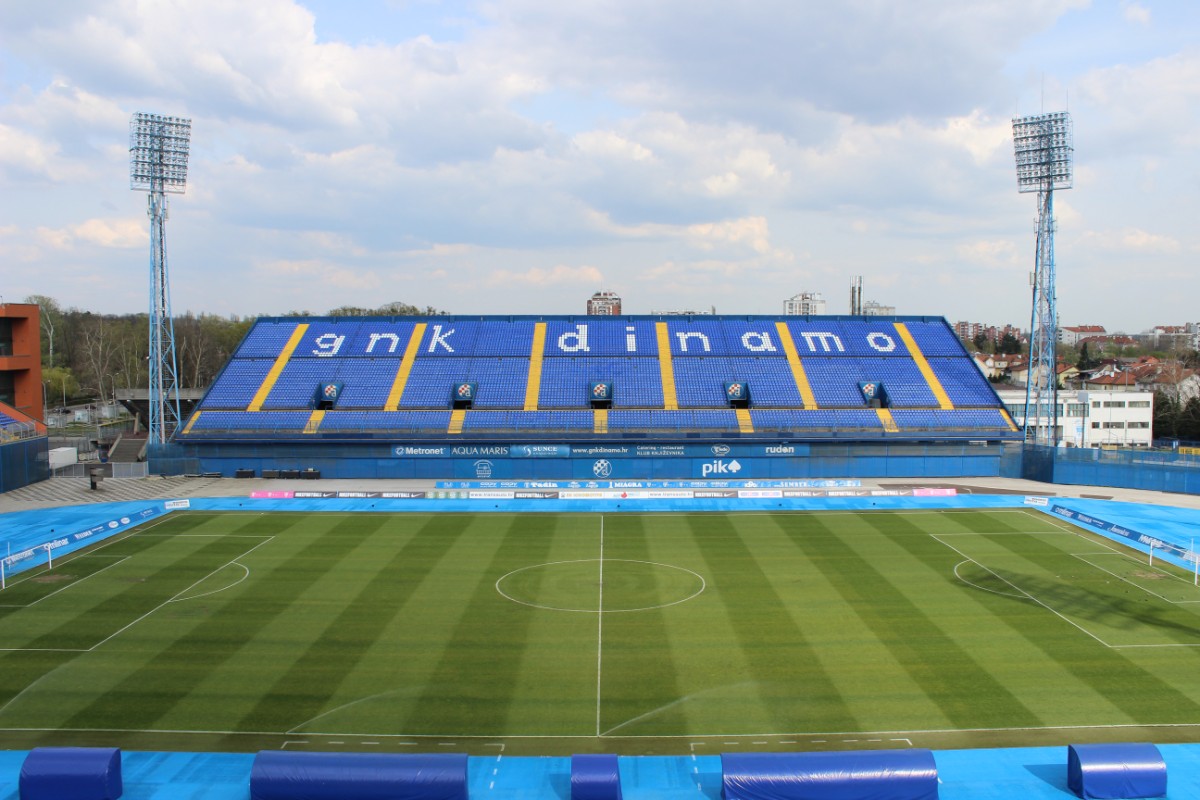
In June 2011, the club invested in city property and by 2013 had renovated and 'beautified' part of the complex: installed new seats, undersoil heating, an automatic irrigation system, light blue artificial grass around the pitch, a modern club hotel called ''67' in honour of the famous generation that won the Inter-Cities Fairs Cup in 1967, modern dressing rooms with top-quality conditions, the Chapel of St. Joseph, numerous auxiliary pitches with artificial grass of which pitch number 7 received the highest UEFA quality certificate, the tunnel through which players exit from the dressing rooms to the pitch was then illuminated with blue neon lighting...
Before installing seats, the stadium capacity was 64,000 places, while afterwards, counting only seating, it was 35,123. The eastern stand, however, has been out of function since damage in the 2020 Zagreb earthquake.
The pitch was laid in 1951 and lasted a full 58 years, until 2009 and U2's double concert. The surface couldn't withstand two consecutive concerts at the full stadium, day after day, so the pitch was replaced and undersoil heating was installed. Since summer 2018, the pitch has had a new, hybrid surface, a combination of 70% natural and 30% artificial grass. This type of surface requires periodic replacement of the complete pitch.