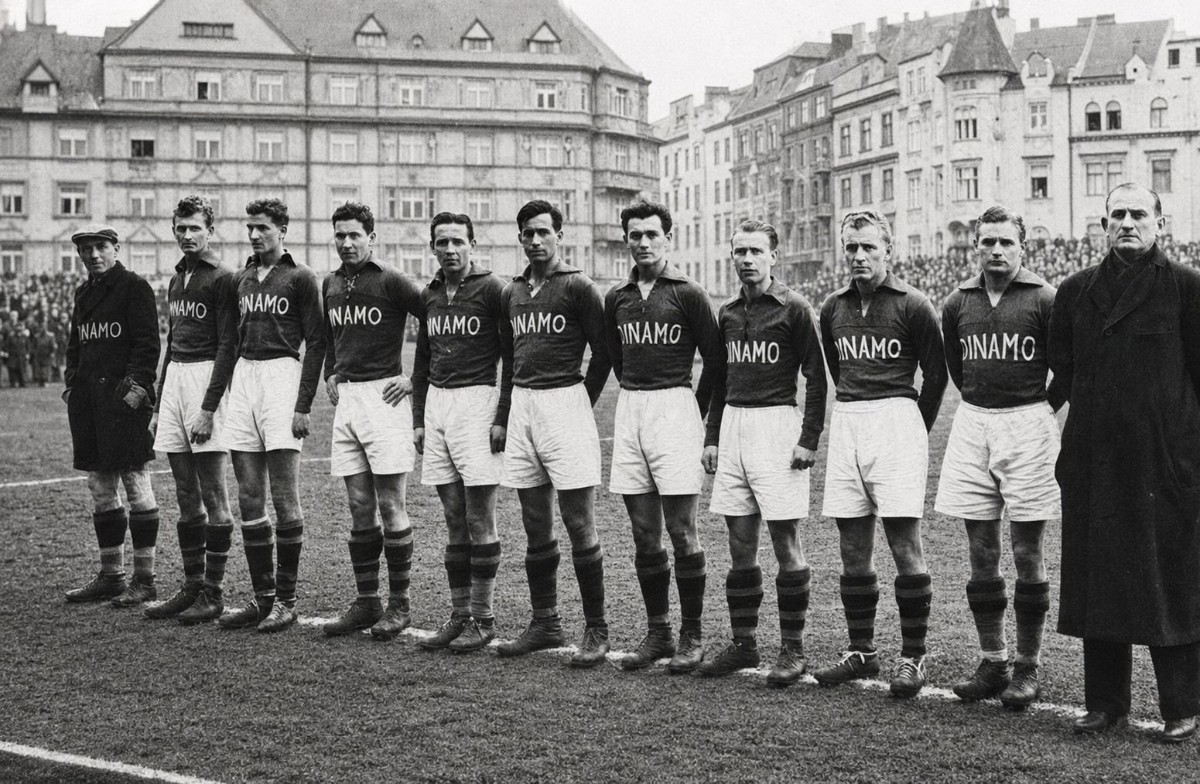
81 years ago, the name Dinamo first came to life in our club
Anniversary
A month and a half ago, on 26th April, we celebrated our club's birthday, and now, on 9th June, we remember the moment when the name Dinamo first came to life in the blue club. Only five days passed between the dissolution of Građanski's management and the formation of Dinamo. The Minister of Health, Aleksandar Koharović, dissolved the management boards of clubs that operated during the NDH period on 4th June 1945, and in the shortest possible time, by 9th June, an Assembly was convened at which Dinamo was formed on the foundations of Građanski.
"I hereby decide to dissolve the management boards of all sports associations, sub-associations, counties, clubs and other physical culture associations in the territory of Federal Croatia, which operated during the occupation from 10th April 1941 until liberation. All movable and immovable property of sports forums and clubs of dissolved management boards is entrusted until further notice to the custody and disposal of the Regional Physical Culture Committee of Croatia (ZEFIOH)," was written in Koharović's decision.
Građanski's management was dissolved on Monday, and by Saturday Dinamo was formed on its foundations. In the same week.
ZEFIOH was precisely the highest republican sports forum that was authorized to interpret the status and continuity of new and old sports associations. The ZEFIOH representative at Dinamo's assembly in June 1945, Miro Mihovilović, therefore the only one who by his function and legitimacy was competent to judge on this matter, later precisely clarified:
"Dinamo continues Građanski's continuity in the same way as Croatia later continued Dinamo's continuity". The club's management was dissolved, not the club itself.
Građanski thus continued to exist in the form of Dinamo, while HAŠK's "academics" under the new name Akademičar then Mladost...
With the end of World War II came a political maneuver: the name I. Hrvatski građanski športski klub was banned because it carried a national prefix, while also associating with the society of one class. The club's full name had a "double problem": the prefix "Hrvatski" carried a clear national connotation, while the name Građanski associated with the bourgeois class, which was contrary to the then idea of a classless society. In such circumstances, they sought some other name that would be in accordance with the socio-political changes.
The Assembly in June 1945 was held in the building of the City Electric Power Plant at Gundulićeva 32, so it was, as we have reminded several times, somehow logical that the meeting participants, thinking about a new name, had the "light bulb moment" with the name Dinamo because a dynamo is an electric generator, an energy driver. Besides, the name also fit into the mentioned socio-political trend given that clubs of the same name existed in the then USSR, although in terms of identity they had no contact points with Zagreb sport.
The story about the author of the name Dinamo itself had different contours because even direct participants of the Assembly recounted their memories in different ways. Some, for example, claimed that the name was given by Herman Mattes, but the author was, as witnesses who seem most credible to us claimed, actually Ivica Medarić.
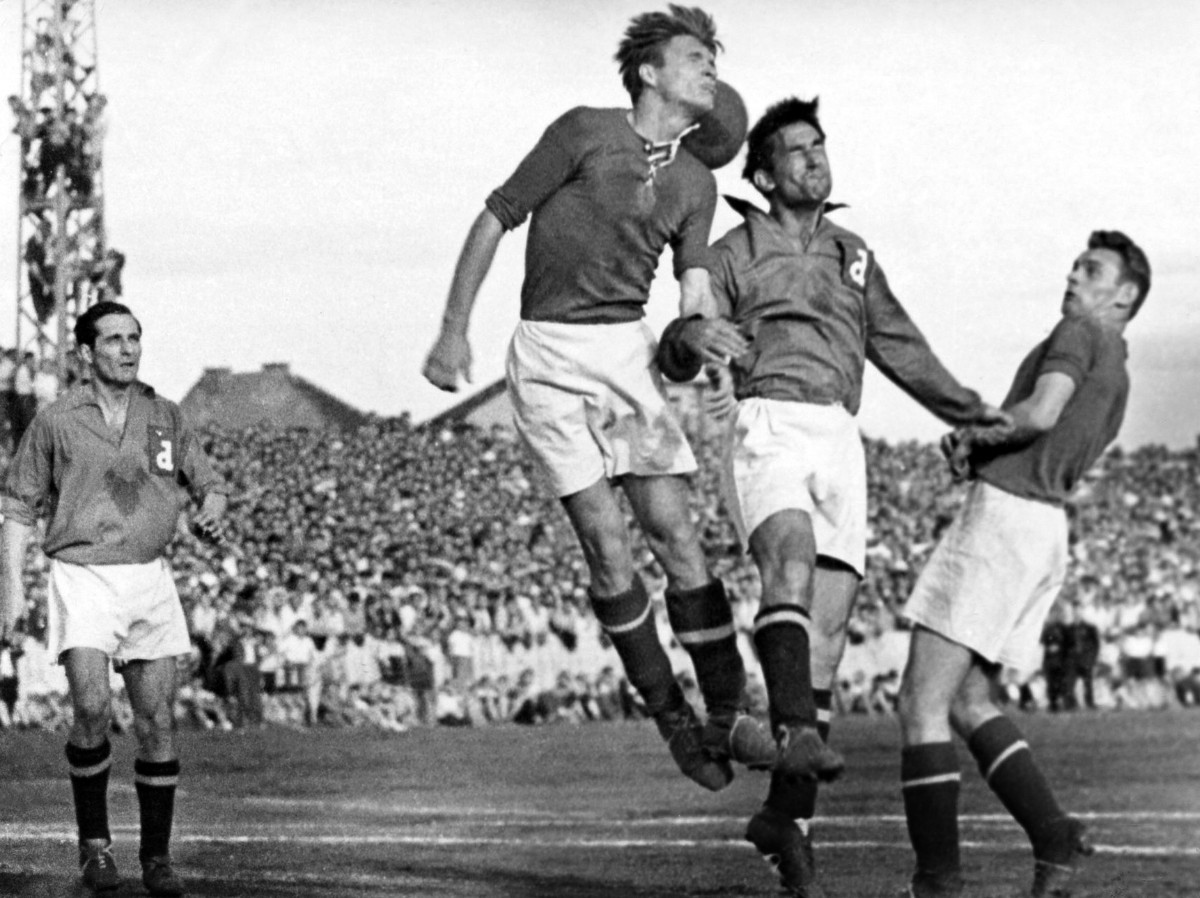
Immediately after the war, all sport was organized according to the Soviet model, on the idea of mass participation, so all clubs were transformed into physical culture societies, which in practice meant they had to have multiple sports branches, not just a football section. In accordance with the new organization of sport in the state, the full name was Fizkulturno društvo Dinamo, with the prefix FD. Dinamo was presented as a club of city municipal companies, and most of Građanski's players were employees of precisely city municipal companies. Soon after, a club of municipal companies was indeed founded, with the simple name FD Komunalac.
The changes within the Zagreb club were in name and organization, while Dinamo's continuity with Građanski is visible in the same color, the stadium in Koturaška, numerous first-team players, but also juniors, coach, fans, even support staff like the masseur... Finally, today's Dinamo crest was designed in 1969 and officially adopted a year later precisely based on the famous crest from Građanski's era.
In just the first twenty days, 16 players who had previously played for Građanski played for the blues, whether for the first team or junior squad, and we're not even counting Milan Antolković who was part of Dinamo but could no longer play due to injury.
As Dinamo's president from the Croatian Spring era, Dragutin Božić, once confirmed to us, there were also public demands from numerous fans for the return of the name Građanski. The management discussed this topic on several occasions and always remained on the position that the club under Dinamo's name had earned an "honorable place in post-war football" with an interesting addition: "if it came into consideration to change the name, then we need to seriously consider what that name will be." Although the idea did not receive political support due to a name that, as they believed, clashed with the idea of a classless society, the club managed to promote a new official crest in 1970 based on the era of Građanski.
The continuity of the Zagreb club from Građanski's era through Dinamo was also emphasized by journalism doyen Žarko Susić, a witness of the times, participant in events and great HAŠK supporter.
HAŠK, for example, continued operating under the name Akademičar because the national prefix had to disappear. Since HAŠK was anyway called "akademičar" in jargon, this became the official name after the war. At the head of Akademičar were the same people who had led HAŠK before the end of the war, led by Ivan Ico Hitrec. It's interesting that Akademičar after the war even legally requested the return of HAŠK's property. Two of them - Hitrec and Medarić - also helped in organizing Dinamo. Hitrec, in the role of technical referee of Dinamo's football section, organized the first training sessions at the ZET pitch. He also called "from his pool" former HAŠK member, coach Branko Kunst, who briefly led the team in the absence of Građanski's coach, Marton Bukovi. After the war, there was no competitive continuity for any club because all previous competitions were interrupted and everyone started from zero. All clubs started from the lowest level, which in practice meant they first played local qualifications, then championships at local then republican level, and based on those placements, state leagues were formed, from first downward.
Marko Belinić, one of the important figures in Dinamo's post-war organization, reminded in his presentation:
"In the summer of 1945, I was visited as president of the City Committee of Croatian Trade Unions and secretary of the People's Liberation Front by Dr. Jerko Šimić, Franjo Wölfl and Ivan Oskar Jazbinšek. They explained the situation in football sport and proposed to revive Građanski's work. They did this also because they knew I had been an active member of Građanski for many years. We soon agreed to continue Građanski's bright football traditions, to gather all eminent players and start work with youth. However, the atmosphere was such that it was not possible to launch this action under the name Građanski, so we agreed that the club with a new name would continue on Građanski's football traditions. Građanski had its stronghold in the Zagreb Electric Power Plant, where along with many other eminent Građanski players, Franjo Wölfl, August Lešnik and many others worked. We decided that the club's color would be blue, as was the color of the First Croatian Citizens' Sports Club founded in 1911 in Zagreb."
Dinamo continued Građanski's line in 1945, and won its first championship title in post-war Yugoslavia in 1948, playing most home matches at its old pitch in Koturaška.
In the summer of 1991, the club received the historically unjustified hybrid name HAŠK Građanski, only to be renamed NK Croatia at the beginning of 1993. Dinamo's name came back to life on the unforgettable Valentine's Day 2000.
