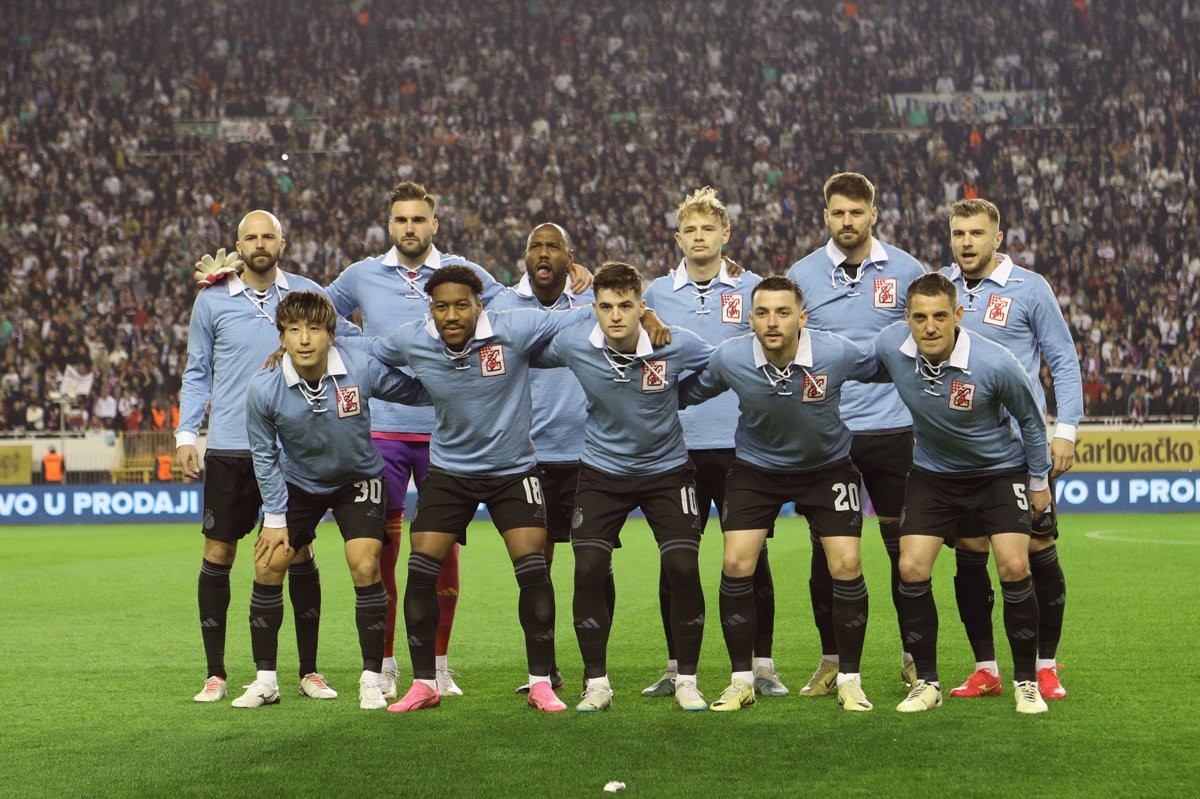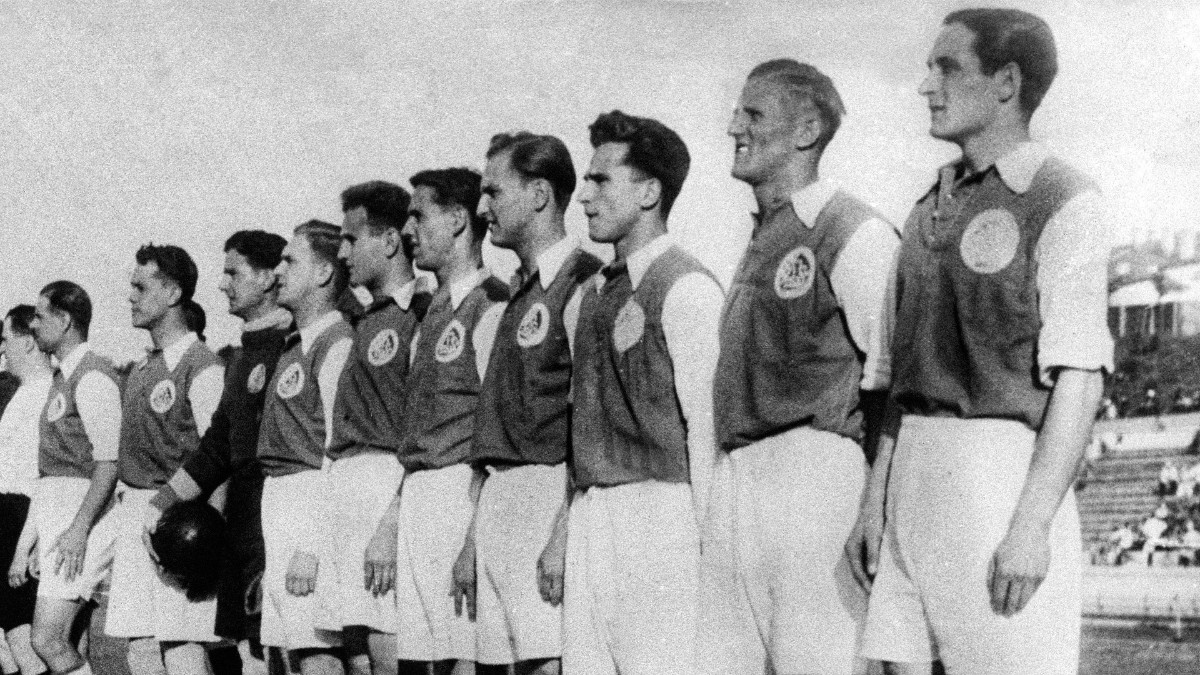
A full 115 years of the Zagreb club, football pride "on the blue sky above Zagreb"
Blue birthday
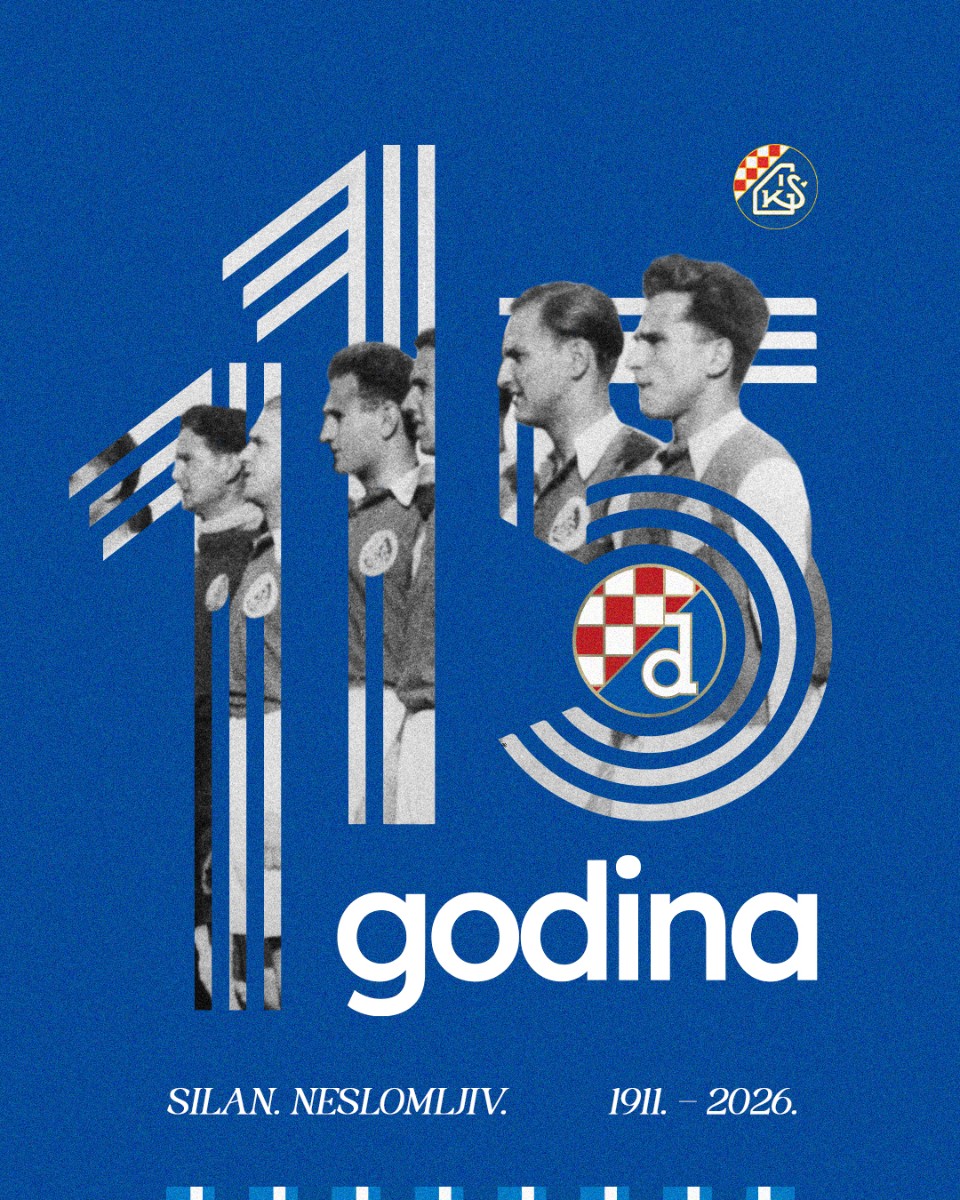
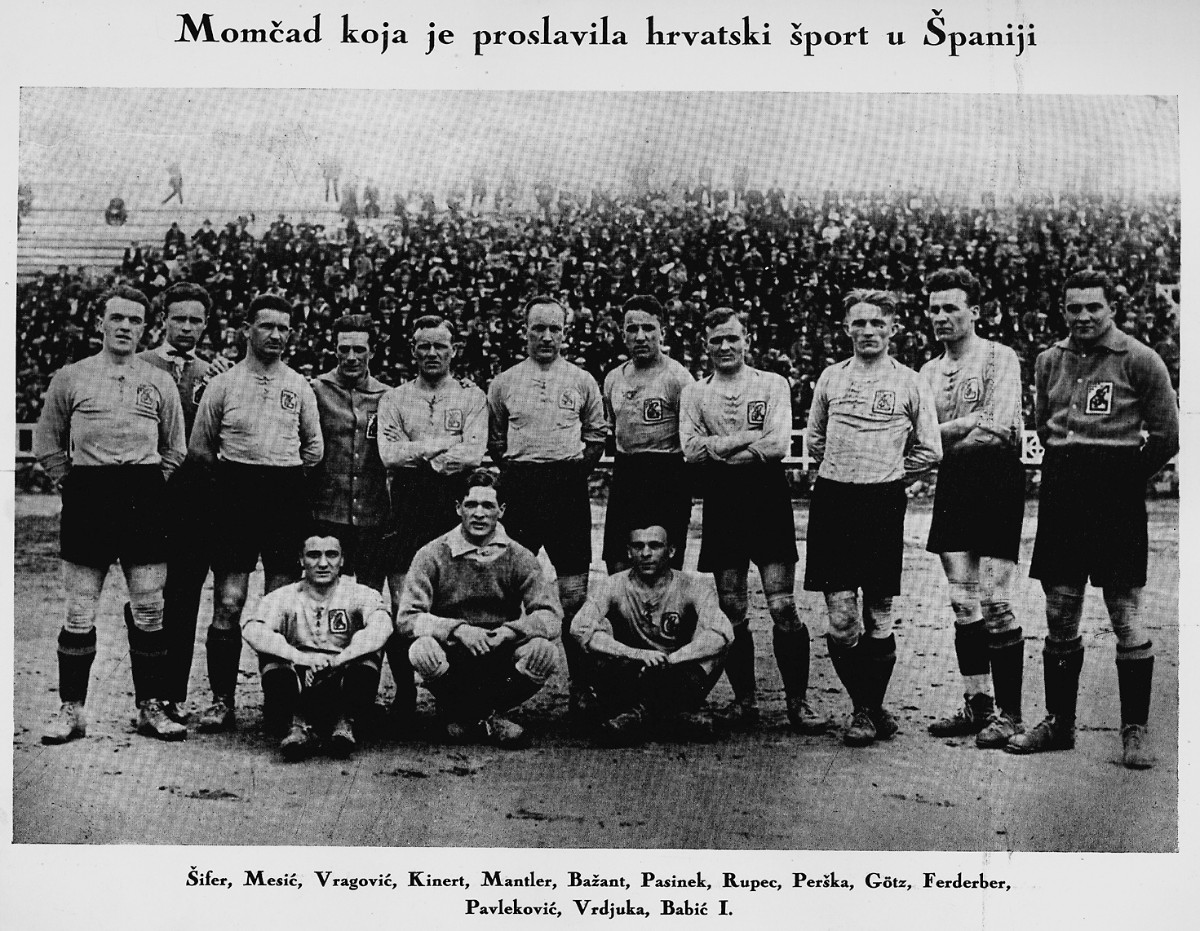
Not only did Građanski participate in tours in Spain for two consecutive years, not only did the victory in the heart of Barcelona against a great opponent resonate throughout Europe, but that resounding result also opened the doors to building a new club stadium... This sequence alone, this detail from history, is a clear suggestion of the meteoric rise of the then still young Zagreb sports society that was approaching only its 12th birthday. Građanski, therefore, had not yet even entered its "teenage" years, yet it had already gained a serious European reputation which it later strengthened with new brilliant performances and victories against strong foreign opponents. Back then it wasn't even a "teenager", and now it has already well surpassed its hundredth year. This Sunday, GNK Dinamo proudly marks the 115th anniversary of its founding. The Zagreb club was established on April 26, 1911, under the name Građanski, and a full 34 years later was transformed and renamed to the name we proudly bear today – Dinamo.
That late April of 1911, the first "all-Zagreb" club finally came to life in our city – a sports society that brought together all citizens of Zagreb, all social classes. And in accordance with that idea, it received the then "ancient" name Građanski.
A month earlier, in March 1911, an idea appeared in Zagreb to establish a football club with a strong Hungarian character, named Zagrabi Magyar torna klub. Given the events that followed the idea of creating a Hungarian club, the method of recruiting players and various extortions, a fierce reaction from Zagreb citizens and sportsmen ensued. Thus, Građanski was founded on the wings of resistance. The resistance, of course, was not directed against Hungarians as a people, but was a reaction to the arbitrariness of individuals and certain institutions. Moreover, Hungarian coaches later had a strong influence on the bright history of the Zagreb club – Imre Pozsonyi, György Gyuri Molnar and the famous Marton Bukovi, while the playing squad featured Jenő Szaraz Abraham, Vilmos Vilim Sipos...
The founding assembly of the Hungarian club in Zagreb was scheduled for April 12, 1911, which, due to massive protests, ultimately failed. However, the idea of founding Građanski, the first club that would unite all Zagreb residents, came to life. The first public meeting of Zagreb sportsmen was held on April 9, 1911, in Nova pivana on Draškovićeva Street, where it was concluded that preparations for founding the club should begin. Just one day after the founding assembly of the Hungarian club failed, a second public meeting was organized with the theme of preparations for founding Građanski. It was held on April 13 in the Matković restaurant at Frankopanska 8, in premises next to today's Gavella Theatre, and more than 300 guests, sportsmen and citizens participated. The liveliest discussion was about the club's name. The first idea was Hrvatski športski klub građana Zagreba (Croatian Sports Club of Zagreb Citizens). The name was slightly changed to I. Hrvatski građanski šport klub u Zagrebu (1st Croatian Civic Sports Club in Zagreb). Soon after, the name was changed to I. Hrvatski građanski športski klub (1st Croatian Civic Sports Club). At that second public meeting, a temporary "ad hoc" Board was unanimously elected, headed by Andrija Mutafelija. The meeting concluded in a euphoric atmosphere, with cheers for the new club, Zagreb sport, and with a collective singing of "Lijepa naša" (Beautiful Our Homeland).
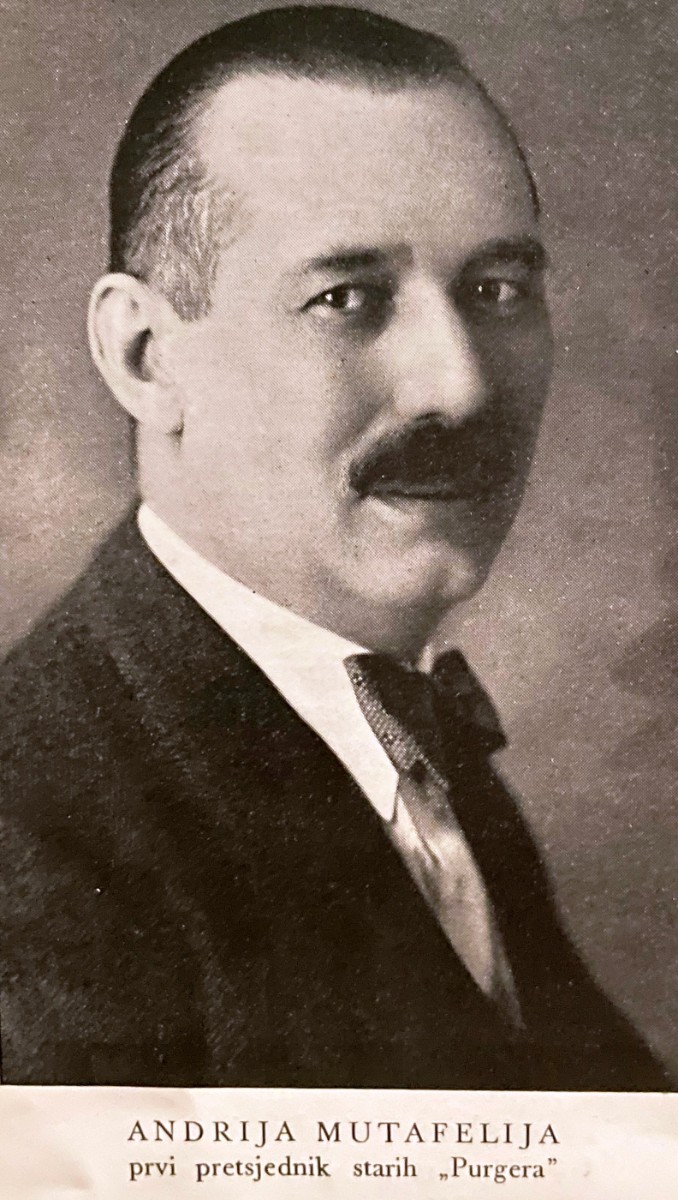
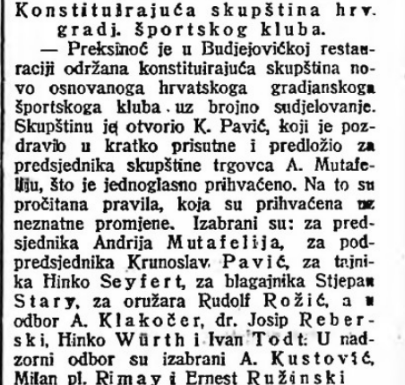
The Board met on April 19 and had the task of drafting the club's rules and proposing them to the constituting Assembly, which had to be convened within 14 days. It was held on April 26 in the Budějovička restaurant in the building of the First Croatian Savings Bank, at the corner of Bogovićeva Street and Cvjetni Square. An interesting fun fact is that on that April 13, 1911, the same day the second, crucial meeting was held on the eve of the club's founding, the most popular pre-war Croatian footballer was born, HAŠK member – Ico Hitrec. Hitrec himself, immediately after the war, helped in organizing Dinamo's football section, while his older brother Rudolf was a long-time Građanski player.
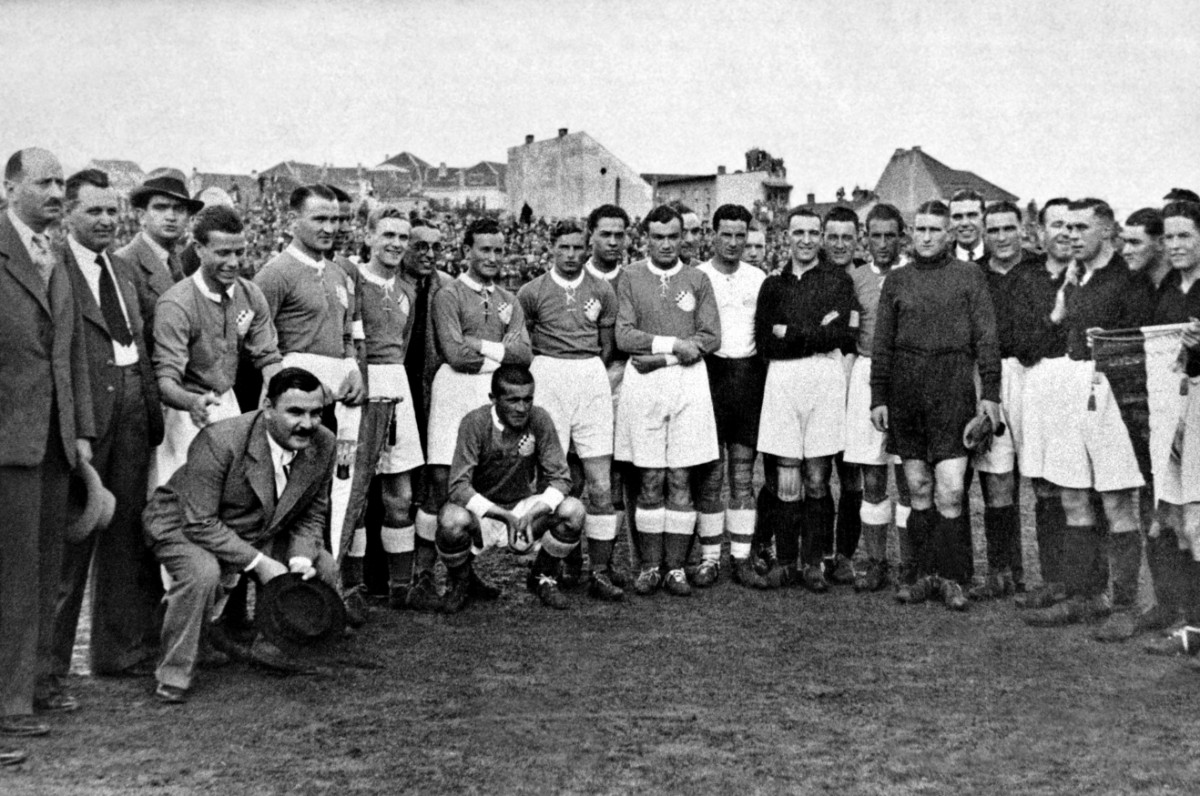
The Zagreb club quickly became a bearer of quality in Croatia and beyond, and numerous victories clearly suggest the strength, importance and quality of Zagreb football in that period. Two victories against the French national team, one away against Austria, then the "wunderteam", a draw against Brazil... There are, of course, the tours in Turkey where Građanski defeated all three Istanbul giants in the span of just one week – Fenerbahçe, Beşiktaş and Galatasaray. The Blues defeated great Austrian and Czech teams while they were at their peak, celebrated with a 7-1 victory against Eintracht in Frankfurt, outplayed München, Stuttgart, Freiburg, Augsburg, then the best French team Racing Paris, twice in a row, day after day, scored five goals against Torino, defeated Panathinaikos away, then strong Hungarian Nagyvarad. On the tour in Spain they overcame Barcelona, Athletic Bilbao, Sporting Gijón... They scored five goals against Liverpool, twice defeated Juventus, within three weeks outplayed both Inter in Milan and Milan in Zagreb...
From the very beginning, as well as throughout its entire subsequent operation, the club represented the true Croatian and Zagreb spirit – it was open to everyone, generously welcoming guests from all sides. It was coached by Austrians, Hungarians, an Englishman, an Irishman, and players came to the club from different parts of the world.
With the end of World War II came a political maneuver: the name Građanski was banned because it was associated with a society of one class, regardless of the paradox that the club itself was created on exactly opposite principles, on the idea of unity of all social classes.
Within just a few days, first the Minister of Health, Aleksandar Koharović, dissolved the management boards of clubs that had operated during the NDH period and could not continue with names that had national connotations, and then, on June 9, an Assembly was organized at which Dinamo was formed.
In accordance with Koharović's decision, "all movable and immovable property of sports forums and clubs of dissolved managements is entrusted until further notice to the custody and disposal of ZEFIOH, the Regional Physical Culture Board of Croatia." Erasing the national prefix in practice meant that the names of Građanski's and HAŠK's pre-war rivals were not acceptable.
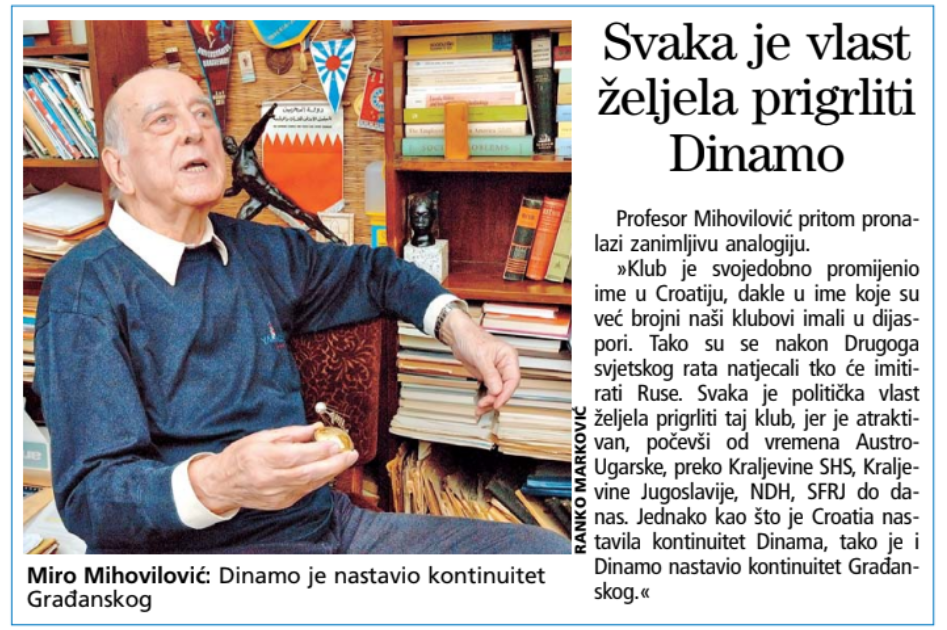
ZEFIOH was the highest republican sports forum also authorized to interpret the status and continuity of new and old sports societies. The ZEFIOH representative at Dinamo's assembly on June 9, 1945, Miro Mihovilović, therefore the only one who by his function and legitimacy was competent to judge on this topic, explicitly clarified in an interview for Vjesnik: "Dinamo continues Građanski's continuity in the same way as Croatia later continued Dinamo's continuity. The club once changed its name to Croatia, that is, to a name that numerous clubs in our diaspora already had. Thus, after World War II, they competed to imitate the Russians. Every political power wanted to embrace that club because it is attractive, from Austria-Hungary, through the Kingdom of SHS, Kingdom of Yugoslavia, NDH, SFRY to today. Just as Croatia continued Dinamo's continuity, so did Dinamo continue Građanski's continuity."
The Assembly was held on June 9 in the cinema hall of the Zagreb Electric Power Plant, and Građanski had its "base" there, as most of the Zagreb club's players were employed there. Dinamo was presented as a club of city municipal workers, and at that time, therefore, most of Građanski's players were employees of city municipal companies. Soon after, a real club of municipal companies was indeed founded, with the simple name FD Komunalac.
The changes were in name and structure, and Dinamo's continuity with Građanski is visible through the same colors, the stadium in Koturaška, numerous first-team players, but also juniors, coach, even the masseur... Finally, today's Dinamo crest was designed in 1969 and officially adopted a year later, precisely modeled after the famous crest from the Građanski era.
In just the first twenty days, 16 players who had previously played for Građanski played for the Blues, both for the first team and junior squad, and we're not even counting Milan Antolković who was part of Dinamo but could no longer play due to injury. Along with coach Bukovi, numerous former recruits from Građanski continued to work in technical roles. Furthermore, the Zagreb team played their first match in Split under the new name Dinamo, where local media in their first reaction announced the arrival with the formulation: "Dinamo is the former Građanski".

There were also public demands from numerous supporters for the return of the name Građanski, but such a maneuver was not possible precisely because of the aforementioned reason: the name was associated with the bourgeois class, which in the then idea of a classless society was not acceptable.
The continuity of the Zagreb club from the Građanski era through Dinamo was also emphasized by journalism doyen Žarko Susić, a witness of the times, participant in events and great HAŠK supporter.
State officials responsible for sport in that post-war period insisted on mass participation, so they decided to reorganize sport according to the Soviet model, transforming clubs into – physical culture societies. This meant in practice that, with the prefix FD, they had to have multiple sports branches, not just a football section.
HAŠK, for example, continued operating under the name Akademičar because the national prefix had to disappear. Since HAŠK was colloquially called "akademičar" anyway, this became the official name after the war. Akademičar was headed by the same people who had led HAŠK from the same office before the end of the war, led by Ivan Ico Hitrec. Interestingly, Akademičar even legally requested the return of HAŠK's property after the war. Two of them – Hitrec and Medarić – also helped in organizing Dinamo, with Hitrec, parallel to his work at Akademičar as HAŠK's continuation, helping in the role of technical referee of Dinamo's football section, organizing the first training sessions at the ZET pitch. He also called for help "from his pool" former HAŠK member, coach Branko Kunst, who briefly led the team in the absence of Građanski's coach, Marton Bukovi. After the war, there was no competitive continuity of any club because all previous competitions were interrupted and everyone started from zero. All clubs started from the lowest level, which in practice meant they first played local qualifications, then championships at local and then republican level, and based on those placements, state leagues were formed, from first to lower divisions.
The Blues this season have the opportunity to reach their "round" 70th trophy. So far they have stopped at 68. The club has won 35 national championship titles, 24 Cup winner's cups, 8 Super Cups and, of course, the most important trophy in club history – winning the Inter-Cities Fairs Cup in 1967, a competition that eventually evolved into the UEFA Cup, today's Europa League.
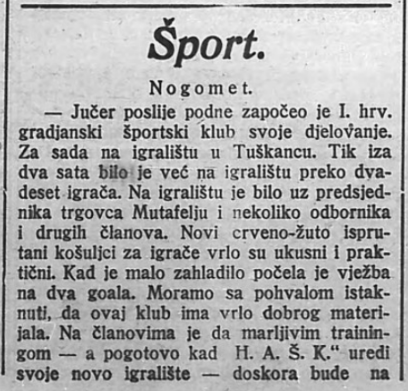
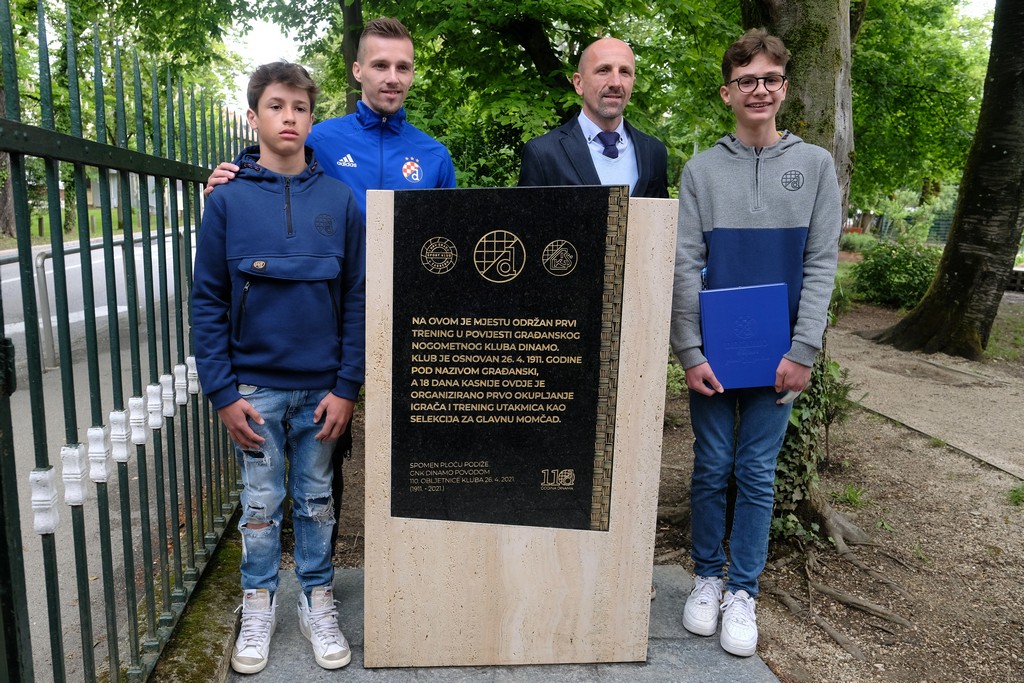
GNK Dinamo placed a commemorative plaque on the 110th anniversary of its founding at the location where Građanski held its first player gathering and first training session in club history. It was on May 14, 1911, at the pitch next to the city water reservoir at Tuškanac, in the area where Jabukovac-Zagreb Elementary School is located today. It was, in fact, a selection of players for the first team. The gathering was scheduled for 2 PM, more than 30 players appeared, and training lasted until evening fell. The entire event was watched by numerous spectators and curious onlookers, which was an indication that the club would have a wide audience. The training was supervised by the then first club president, Andrija Mutafelija, in the company of the complete Management Board.
Because of all the above, Dinamo changed its prefix from NK to GNK on the 100th anniversary of its founding, thereby, let us remember again, incorporating the dear and glorious name Građanski as an "introduction" to the equally dear and glorious name Dinamo on both symbolic and identity levels.